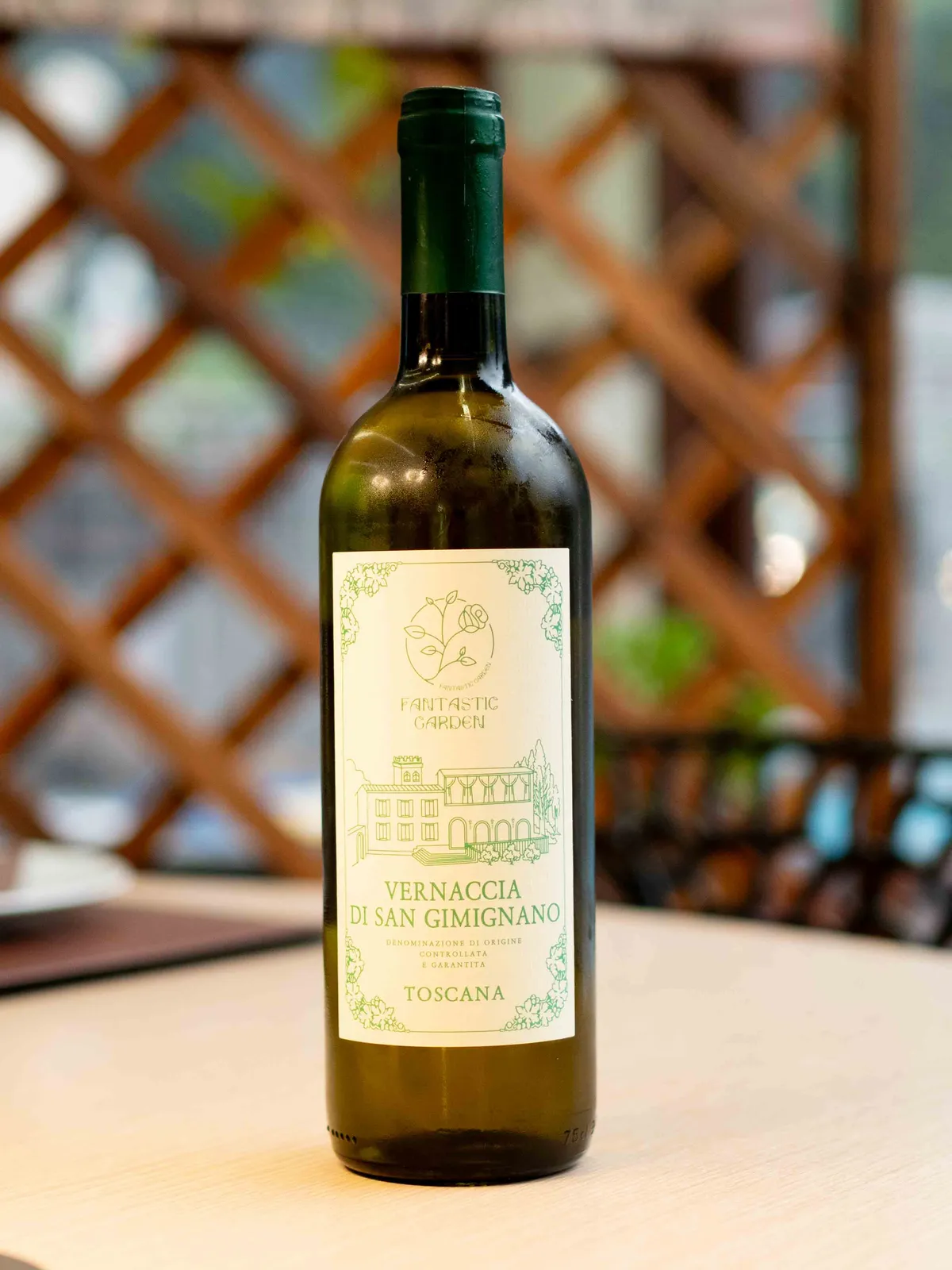
Vernaccia di San Gimignano is the Tuscan white wine with the longest pedigree: the first denomination in Italy to be awarded the DOC, cited by Dante, produced on a single cluster of hills from a grape found nowhere else. For comparison, most Tuscan whites are made from international grapes that arrived only a few decades ago; Vernaccia is documented from before the Renaissance. This history is not folklore: it is written into the DOCG regulations and defines everything that Vernaccia is.
Vernaccia di San Gimignano in five numbers
- 1966: the very first Italian denomination to be awarded the DOC
- 1993: promotion to DOCG, the highest tier
- 1276: first documented mention, in the archives of the Comune of San Gimignano
- 85% minimum Vernaccia di San Gimignano grape in the bottle
- 1 single production zone: the hills around San Gimignano
The history: from Dante to Italy's first DOC
Vernaccia as we know it today has its roots in the Middle Ages, on the hills of San Gimignano, in the heart of Tuscany. The first documented mention dates to 1276, in the town's tax archives: even then it was a prized wine, exported and taxed as a valuable commodity. Dante cites it in the Divine Comedy (Purgatorio, Canto XXIV), where Pope Martin IV atones for the gluttony of having indulged in it without restraint; in the 16th century Sante Lancerio, cellarman to Pope Paul III, praised it as one of the great wines of Italy.
The name is not a brand: Vernaccia di San Gimignano is a distinct native grape, unrelated to the other Italian "vernacce" (the one from Oristano in Sardinia, the red one from Serrapetrona in the Marche). For those used to whites from international grapes, this identity explains much of the wine's character: savoury, dry, with the characteristic bitter-almond finish.
DOC recognition came in 1966, the first denomination decree in Italian history; DOCG, the highest tier, in 1993.
The DOCG regulations
| Type | Minimum aging | In wood | In bottle | |---|---|---|---| | Vernaccia di San Gimignano | released from the year after the harvest | not required | not required | | Vernaccia Riserva | at least 11 months | optional | at least 3 months |
The base version is released young, to highlight freshness and minerality; the Riserva ages longer, sometimes with a passage in wood, developing structure and complexity.
In the glass it is a straw yellow that shifts towards gold with age. On the nose, white flowers, citrus, green apple and a mineral note; on the palate it is dry, savoury, with good acidity and that bitter-almond finish that is its signature. Served at 10-12°C, in a medium-sized white-wine glass.
Vernaccia and the Tuscan table: the white that opens the meal
Vernaccia di San Gimignano and the Tuscan table were born in the same piece of land as the Brunello and the Bistecca alla Fiorentina, but it plays a different role: it is the white that opens the meal. Its savouriness and that bitter-almond finish "cleanse" the palate between courses, and stand up to the appetisers without overpowering them.
It is the natural pairing for our Gran Tagliere of cured meats and cheeses, for fish and white meats, and it is surprising even with our artisan pizza. If you are searching for "what white wine to drink with a Tuscan board", this is the historically correct answer.
Our Vernaccia on the wine list: the "Fantastic Garden" label
Our Vernaccia di San Gimignano on the wine list is our own "Fantastic Garden" label: a savoury, dry Tuscan classic that we bottle under our own name because a white from San Gimignano should be able to open everyone's dinner, not just be admired on the list of important wines. It is the white most chosen at our tables, perfect for "cleansing" the palate between courses.
A "Fantastic Garden" Vernaccia to open, char-grilled meat all you can eat in the €29.99 of the All You Can Steak: the complete Tuscan dinner, from white to red. Book a table to try the pairing.
Frequently asked questions about Vernaccia di San Gimignano
What kind of wine is Vernaccia di San Gimignano? A Tuscan dry white from the native grape of the same name, produced on the hills of San Gimignano. It was the first denomination in Italy to be awarded the DOC (1966) and has been DOCG since 1993.
What is the difference between Vernaccia di San Gimignano and the other "vernacce"? It is a distinct native grape, unrelated to Vernaccia di Oristano (a Sardinian oxidative wine) or Vernaccia di Serrapetrona (a red sparkling wine from the Marche). Only the one from San Gimignano is this Tuscan dry white.
What pairs with Vernaccia di San Gimignano? Appetisers, cured meats and fresh cheeses, fish, white meats and pizza. It is also excellent as an aperitif and to open a meal centred on char-grilled meat.
At what temperature is Vernaccia served? At 10-12°C, in a medium-sized white-wine glass. The more structured Riserva versions can go slightly higher, around 12-14°C.